
aerator

Jet aerator
发布时间:2026-04-08 08:04:51 阅读: 作者:本站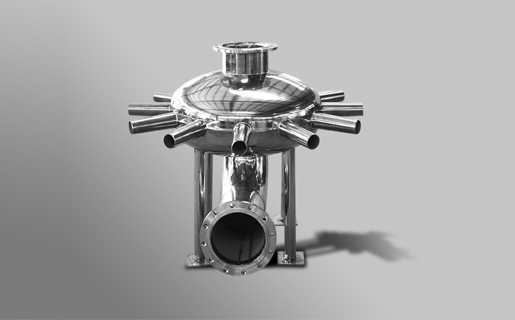
The disc jet aerator is the first to introduce the theory of impact loss, reducing energy and momentum loss by simplifying the nozzle and optimizing the injection diameter, thereby improving oxygenation efficiency, mixing effect, and propulsion capacity.
(1) Aeration and Oxygenation: Primarily through four pathways:
In-nozzle oxygenation,
Horizontal jet zone oxygenation,
Vertical rising zone oxygenation,
Secondary turbulence zone oxygenation.
Multiple oxygen transfer pathways result in high oxygen transfer efficiency, unmatched by other aeration devices.
(2) Mixing and Stirring: With the ejector medium shut off, the working medium is injected at high speed from the inner nozzle. The surrounding low-speed liquid is continuously entrained and undergoes momentum exchange, forming new fluid. This cycle repeats until momentum is completely lost. Momentum is lost along the flow path, and the flow rate increases along the flow path, ultimately achieving mixing and stirring of the liquid. Therefore, no oxygen is involved in this process, hence it is an anaerobic stirring effect. (3) Flow propulsion principle: The gas-liquid mixture or liquid is sprayed at high speed from the nozzle. After exchanging momentum with the surrounding liquid, it can drive the surrounding liquid to flow in the direction away from the nozzle. Therefore, the FLD type disc jet aerator also has a flow propulsion effect.


